I engineer software products that survive the real world.
I work with startup founders, CTOs, and product leaders to build and modernize SaaS, AI-enabled, mobile, enterprise, and connected systems — handling complex engineering from architecture through deployment. Remote, worldwide.
One engineer, accountable from the device layer to the interface.
Complex products rarely fail because of one missing feature.
They fail from accumulated engineering risk — decisions nobody owned, systems nobody can maintain. These are the patterns I'm usually called in to prevent or repair:
What worked for the demo collapses under real tenants, real data volume, real concurrency.
- Single-tenant assumptions baked into the schema, so every new customer multiplies manual setup and risk
- Queries that were instant at a thousand rows time out at ten million — and the fix touches half the codebase
- Race conditions and double-writes that only surface under real concurrent load, never in testing
Nobody accountable across backend, frontend, and integrations — so problems fall between the seams.
- The backend blames the frontend, the frontend blames the API, and the bug sits unowned for weeks
- Integration contracts that live only in chat threads, so every handoff re-negotiates them
- No single person who can trace a defect from the UI click down to the database row
Work starts without written deliverables and milestones, then drifts on budget and timeline.
- “Small changes” absorbed silently until the budget is gone and the roadmap isn't
- No milestone definition, so “done” becomes a negotiation instead of a checklist
- Estimates issued before anyone wrote down what the system actually has to do
Live systems that must keep running while being modernized — no room for rip-and-replace.
- Users online every day, so schema changes and migrations must land without downtime
- Undocumented behaviors other systems quietly depend on — break one and you find out in production
- A rewrite estimate so large it never gets approved, while the old system keeps aging
Impressive prototypes with no guardrails, no verification, and no path to production reliability.
- One good demo prompt, zero evaluation of the thousand ways real inputs differ from it
- No guardrails or human checkpoints, so a wrong output writes straight into business data
- Cost and latency never measured until the first real invoice arrives
Code the next developer can't pick up — no docs, no tests, no ownership handover.
- No tests, so every change is a gamble nobody wants to take
- Knowledge that left with the last contractor — no docs, no diagrams, no handover
- A deployment process only one no-longer-reachable person ever knew how to run
What I build
Take a product from specification to production — multi-tenant SaaS, client portals, marketplaces, and internal systems with one engineer accountable end to end.
Modernize legacy platforms without stopping the business — backend replacement, architecture repair, integrations, performance work, and senior capacity for your team.
Add AI to a real product with production discipline — document processing, intelligent search, chat interfaces, and human-in-the-loop workflows with guardrails.
Software that reaches the physical world — IoT platforms from sensor to dashboard, GPS fleet tracking, Android and cross-platform apps, and desktop applications.
Specialist industry depth: Healthcare IT (10+ years, clinical & diagnostic systems) and Fleet & Logistics, plus dedicated Android & cross-platform app development.
Case studies from production
Problem: a live multi-site music-broadcast platform that had to keep running while being modernized.
Contribution: new mobile API, admin panel, cross-platform app redesign, and an owned analytics stack.
Built AI-native from a 1,675-line specification and zero code — 39% of consequential decisions made by a human, zero wrong writes to production.
Multi-tenant SaaS platform for Legionella risk assessment and regulatory compliance (ISTISAN 22/33).
Enterprise IoT asset management over a fully meshed network — from sensor telemetry to operational dashboard.
Also in healthcare: IntelliMedsol — clinical workflows & diagnostics platform.
One engineer, accountable across the system
Not a logo wall — a working stack. Each layer below is territory I take responsibility for, from product architecture down to the devices.
How engagement works
Every engagement follows the same structure — clear milestones, no black boxes, no surprises.
Free call to understand your goals, technical constraints, and timeline. No obligations — just an honest conversation about what you're building.
Written scope covering deliverables, milestones, and cost. Nothing starts without your written agreement. Scope changes are documented before work begins.
Milestone-based development with working demos at each checkpoint. You see real progress — not status reports. Weekly async updates keep you in the loop.
Your feedback is incorporated at every milestone before moving forward. You have sign-off at each stage, so there are no surprises at the finish line.
Full source code, technical docs, and deployment assistance. Your next developer can pick up the codebase without needing to call me.
Strategy and implementation in one engagement
“Zammer exemplifies focus and consistently delivers on time, inspiring confidence and collaboration. I will certainly seek his partnership again!”
“Excellent work on the Spring Boot / Angular project. Helped with Java, JavaScript, database handling, and great UI work too.”
“Worked well with Zameer to do a feasibility study for an integration of our system. Good communication and proactiveness.”
“Best Freelancer — Amazing app developer! Don't use anyone else.”
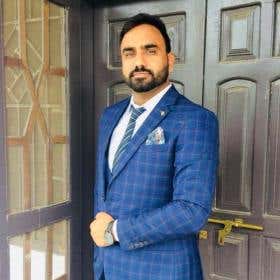
Zameer Faiz
12+ years building production-grade systems across enterprise and startup environments. Founder of Softifyme, a software consultancy delivering full-stack web, mobile, and IoT solutions — bridging enterprise Java backends, modern web frontends, and physical connected devices end to end.
Engineering notes
Common Questions
Everything clients typically want to know before starting a project.
Cost depends on scope, features, integrations, timeline, and technical complexity. A simple internal tool or business website is priced very differently from a full SaaS platform or mobile app. After reviewing your requirements, I provide a clear estimate with recommended phases — so you understand what to build first and what can wait.
Both models are available. Fixed price works well for projects with a clearly defined scope — you know exactly what you will pay. Hourly or time-and-materials suits projects that are likely to evolve, such as ongoing product development or R&D work. I'll recommend the right model based on your project during our initial call.
Yes. Phased delivery is a practical option for budget-conscious projects — we build the core features first, validate them, and expand from there. This reduces upfront cost and financial risk while still delivering a production-ready product at each phase.
Always. After the initial discovery call, I provide a written proposal covering scope, deliverables, timeline, and cost. Nothing starts without your written agreement. Any changes in scope are documented and agreed before work begins.
Every engagement follows the same structure: Discovery (understanding your requirements) → Proposal (scope, timeline, and cost in writing) → Build (milestone-based development with regular demos) → Review (your feedback incorporated at each milestone) → Handoff (full source code, documentation, and deployment). You have visibility at every step.
You get a progress update at every milestone — typically weekly for active builds. I share working demos wherever possible so you can see real progress, not just status reports. I'm also available for quick async check-ins between milestones for any urgent questions.
I'm based in Pakistan (UTC+5), which gives strong working-hours overlap with the UK, Europe, the UAE, and Saudi Arabia, and a comfortable morning/evening overlap window with the US and Australia. I keep communication async-first and share daily written updates — so clients across all these regions get responsive collaboration regardless of the time difference.
I adapt to your preferred tools. Commonly used options include Jira or Trello for task tracking, GitHub or GitLab for code and version control, and Slack or Teams for communication. If your team already uses a tool stack, I integrate into it.
Backend: Java, Spring Boot, Hibernate, C#, .NET. Frontend: React, Angular, HTML5, CSS3. Mobile: Android, cross-platform. Desktop: JavaFX, WPF. IoT: Raspberry Pi, Arduino, MQTT. Databases: PostgreSQL, MySQL, SQL Server, MongoDB. I have worked across healthcare, fleet management, compliance SaaS, e-commerce, and IoT domains.
Yes — API integration, legacy system extension, and database migration are common in most projects I take on. I've connected systems using REST, SOAP, MQTT, and various third-party platforms. If you have existing infrastructure, I'll assess it during discovery and design the integration approach carefully.
Yes. I handle deployment to cloud platforms (AWS, Azure, DigitalOcean, Vercel) and can configure CI/CD pipelines, Docker containers, and server environments. For larger infrastructure requirements, I'm happy to work alongside a dedicated DevOps team.
Yes — healthcare IT is one of my core specializations, with 10+ years of experience. IntelliMedsol consolidates clinical workflows, diagnostics, and billing for a production hospital environment (Horizon Medical World). Legionella 360 is a multi-tenant SaaS platform helping Italian hotels and hospitals manage Legionella contamination risk under ISTISAN 22/33 regulatory compliance. Both are live, in-production systems included in my portfolio.
Yes. AetherMesh is a Java/Spring Boot + MQTT IoT platform I built for real-time location tracking and sensor monitoring of physical assets across large facilities — deployed as a multi-tenant SaaS tracking hundreds of assets with sub-second dashboard latency. I bridge the hardware layer (Raspberry Pi, Arduino, MQTT) with the backend and dashboard, so the whole stack — sensor to screen — is one engagement.
Yes. I've forked and heavily customized the open-source Traccar GPS server — building a custom BCE device-protocol decoder, fixing server-side timestamp bugs, and integrating live tracking data into an external fleet management system. If your fleet uses non-standard tracking hardware or protocols, this is exactly the kind of integration work I do.
Yes, both. Pick Plug is a mobile sports-picks app where I rewrote a broken Android in-app-purchase flow end-to-end and fixed a backend subscription webhook that was failing to unsubscribe users — conversion errors dropped to zero after the fix. Biryan Express is a full Android e-commerce app I built from scratch, covering catalogue, cart, checkout, and an admin panel for the operations team. I also build JavaFX/.NET desktop applications when a project calls for a native desktop client instead of, or alongside, mobile.
Yes — these are among my primary markets alongside the US. Being based in Pakistan (UTC+5) gives strong working-hours overlap with the UAE, Saudi Arabia, the UK, and Europe, and a workable overlap window with Australia and the US. Communication, contracts, and delivery are all handled remotely and async-first, the same way as with any other client.
You do — completely. On project completion and final payment, you receive full ownership of the source code, assets, and all associated intellectual property. There are no licensing restrictions, no vendor lock-in, and no ongoing dependency on me unless you choose a support arrangement.
Yes, without hesitation. I'm happy to sign your NDA before any project discussion begins. Confidentiality is standard practice — I don't share client project details, codebases, or business information with anyone.
Likely yes. My background spans healthcare IT, compliance SaaS, IoT, fleet management, e-commerce, and mobile apps. The portfolio on this site includes real production projects across most of these areas. If your industry isn't listed, reach out — I'm happy to discuss relevant experience directly.
Yes. Post-launch support is available as an optional monthly retainer or on a per-incident basis. I offer bug fixes, performance monitoring, feature additions, and dependency updates depending on what you need. We'll discuss the right arrangement during the proposal stage.
Minor refinements within the agreed scope are included. Larger changes or new features are scoped and quoted separately before any work begins. I document all change requests in writing so there are no surprises on either side.
Yes — this is a deliberate design goal. I write clean, documented, maintainable code and avoid unnecessary complexity. Most projects come with basic technical documentation. Your in-house team or a future developer should be able to understand and extend the codebase without needing me.
Both. I've built MVPs for early-stage startups and delivered large production systems for established enterprises. The approach differs — startups benefit from phased builds and lean architecture, while enterprises need rigorous planning and integration work. I adapt to the context.
Yes. I've built multi-tenant SaaS platforms from architecture through to deployment — including user management, billing integration, role-based access, and analytics. The Legionella 360 compliance platform in my portfolio is a recent example.
Yes. I integrate LLM-based features (document processing, intelligent chat, content classification) and rule-based automation into existing applications. I don't build AI models from scratch, but I connect your product to the right AI APIs and build the surrounding logic that makes them useful in your workflow.
Have a question that's not listed? Ask me directly →
Building something technically demanding?
Share the product, constraint, or engineering problem. You will receive a direct assessment of the most practical next step — within 24 hours.
No-obligation discovery · Confidential · NDA available